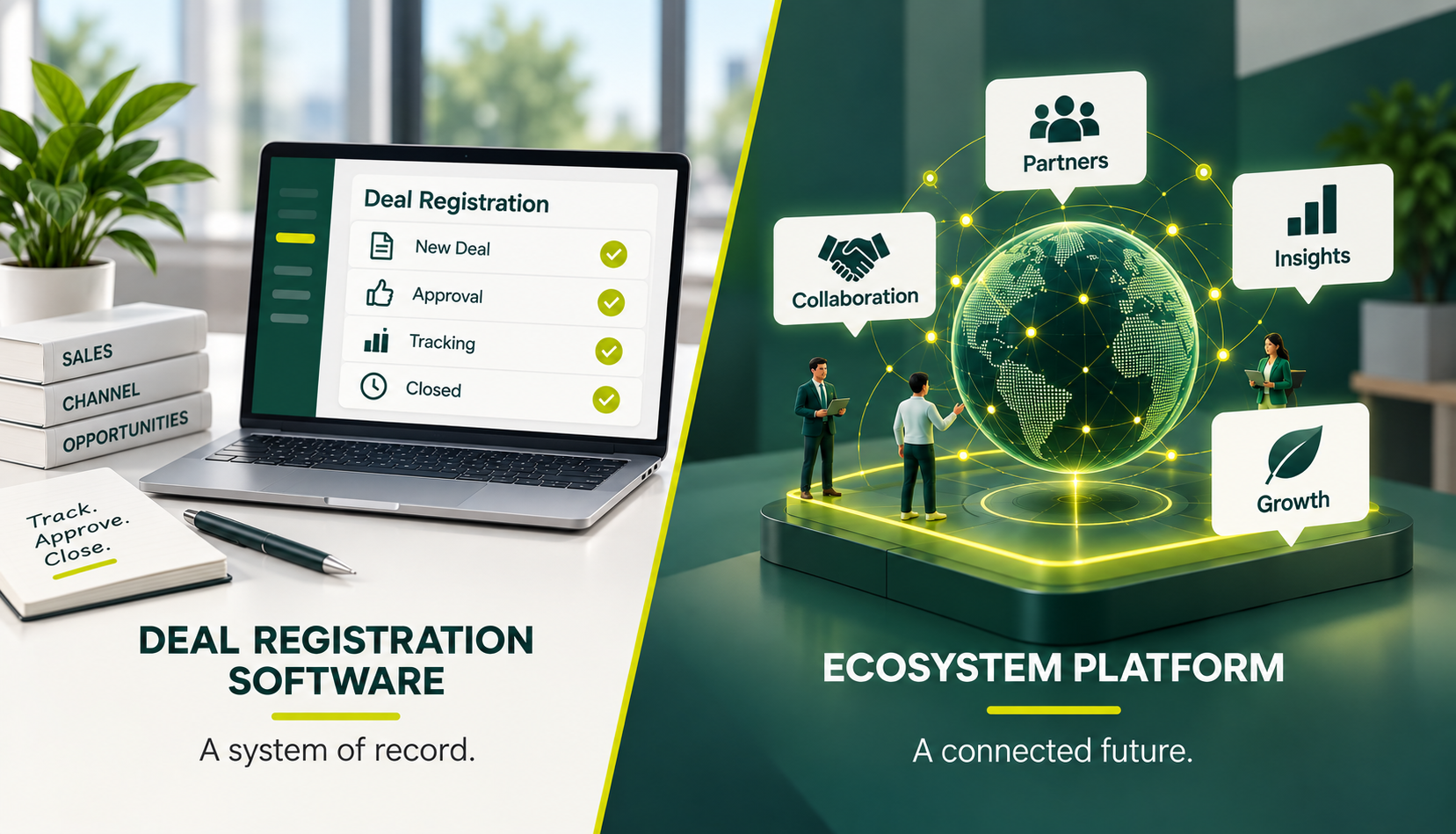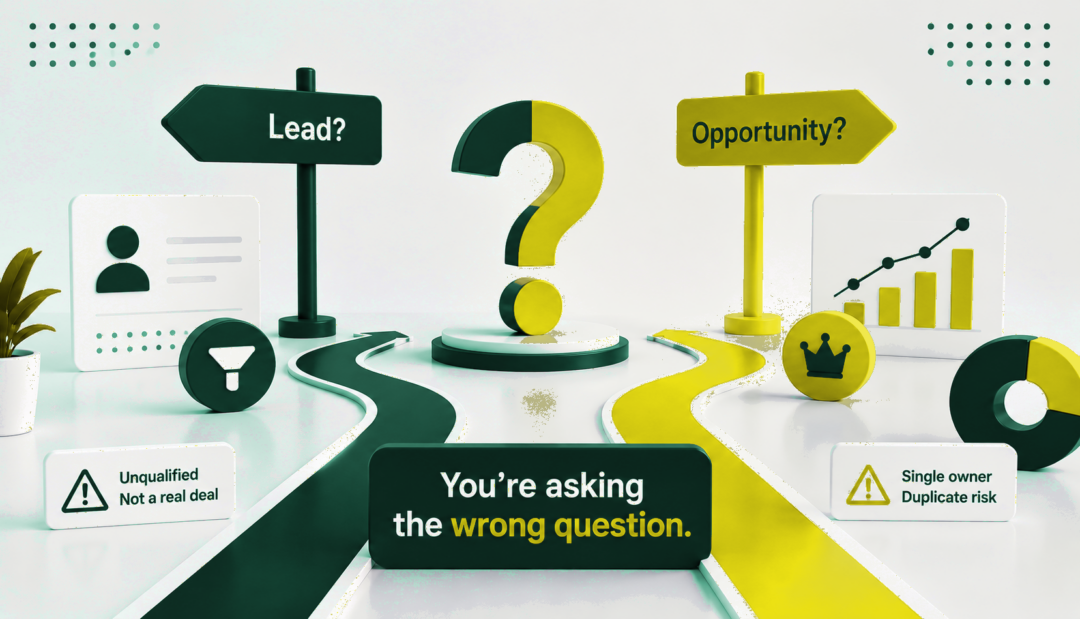

The stakes are real. According to Forrester’s State of B2B Partner Ecosystems research, 67% of B2B leaders plan for indirect revenue to grow by more than 30% year over year. Growth targets that ambitious require partner engagement at a level portals structurally cannot produce.
Most programs are not built for that. And most vendors do not realize it until the pipeline tells them.
The issue is not ambition. It is architecture. And it starts with how the ecosystem gets defined in the first place.
What Most Vendors Mean When They Say “Ecosystem“
When most vendors describe their channel partner ecosystem, they mean one of these:
- A portal with multiple partner types (resellers, ISVs, MSPs, SIs)
- A tiered program with structured benefits and deal registration
- A branded environment where partners log in to access content and tools
That is a sophisticated partner program. It is not a channel ecosystem.
A channel ecosystem, properly understood, is a network the partner is already operating inside before any single vendor shows up. The partners are there. The relationships exist. The deal flow is already moving.
The vendor’s job is not to build that network from scratch. It is to connect to one that already exists. That is a fundamentally different starting point.
What a Partner Portal Actually Is and What It’s Good At
A partner portal is a single-vendor digital environment, typically powered by a partner relationship management (PRM) platform.
It typically includes:
- Content and collateral libraries
- Deal registration workflows
- Partner training and certification
- Program performance tracking
Done well, a partner portal is genuinely useful. It creates structure around deal registration, content distribution, and performance tracking.
The limits are structural, not operational. A portal tracks what partners do with one vendor. Data flows in one direction, toward that vendor’s CRM.
That is not a flaw. It is what a portal is built to do. But the question is whether that architecture can deliver what a partner ecosystem actually requires.
The Three Tests That Separate a Portal From an Ecosystem
Apply these three tests to your current program. They are not about features or functionality. They are about structure. And the answers will tell you more about your program than any dashboard report will.

Test 1: Are your partners already inside it before you arrive?
This is the single-vendor vs. multi-vendor test.
A portal requires the vendor to recruit partners, convince them to register, and build engagement from the ground up. Partners start from zero.
A channel ecosystem is different. Partners are already active inside it, transacting with other vendors, operating their existing workflows. When a vendor connects to a genuine ecosystem, they step into an existing network.
If your partners had to create a new account to engage with your program, you have a portal.

Test 2: Does data move between vendors, or only into your CRM?
This is the ecosystem orchestration test.
In a portal, data moves in one direction: toward the vendor’s CRM.
In a channel ecosystem, intelligence gathered across multiple vendor relationships informs how partners prioritize their time and which deals they pursue. That cross-vendor data layer is what ecosystem orchestration means, and it is something a single-vendor portal cannot provide by design.
If your program generates data for your CRM but not for your partners’ decisions, it is a portal.

Test 3: Does it reduce the partner’s total admin burden, or add to it?
This is the partner experience (PX) test.
Partners today manage:
- Multiple portals across many vendor relationships
- Multiple deal registration processes
- Multiple sets of program rules and content libraries
Each new portal adds to that burden. It may feel like progress from your side. From the partner’s side, it is one more system to log into.
A genuine channel ecosystem reduces that burden. Because partners are already operating inside it, your program surfaces inside a workflow they already use. No new login required.
If your program is one more system on a partner’s list, you have a portal.
Why Most Vendor Programs Fail at Least One of These
Most vendor programs fail at least two of these tests. Often all three. And this is not a technology problem. In fact, it is a design problem.
Most channel programs were built starting from the vendor’s need for visibility and control, then extended outward toward partners. That made sense when partner rosters were smaller and partners worked with fewer vendors at once.
It makes less sense now. Today, Partners manage multi-vendor relationships simultaneously. The vendors who create the least friction for that reality earn the most partner attention and deal flow.
This is also why ecosystem-led growth (ELG) has become the defining GTM conversation in the channel. ELG only works if there is an actual ecosystem underneath it.
A portal dressed up as an ecosystem breaks the motion before it starts. Partners do not engage more deeply because a vendor calls their portal an ecosystem. They engage because the program is already where they work.
This is not a criticism of any specific platform or the teams building on top of them. Most portals are well built for what they are designed to do. The program’s design creates the gap before execution even begins.
What a Real Channel Ecosystem Looks Like in Practice
So what does a program actually look like when it passes all three? Not as a framework on paper, but as something partners already use every day.
That is exactly what Vartopia is built around.
Unlike a traditional partner portal, Vartopia is not a system vendors build and ask partners to join. It is a network partners are already operating inside, across hundreds of vendor programs simultaneously. When you connect your program to Vartopia, you are not starting from zero. You are stepping into a live, active ecosystem where the partners are already there.
Here is what that looks like against each test.
Test 1: Are your partners already there before you arrive?
When you join Vartopia, you are not building a partner network from scratch. You are connecting to a community of 150,000+ partner companies and 350,000+ partner users who are already active and already transacting across hundreds of vendor programs simultaneously. Your program does not start at zero. It starts where your partners already are.
Test 2: Does data move across vendors, not just into your CRM?
Vartopia sits across multiple vendor programs at once. Partners get visibility into their vendor relationships in one place, not scattered across separate portals. You get insight into how your program performs inside a real ecosystem, not just inside your own reporting dashboard.
Test 3: Does it reduce the partner’s admin burden, or add to it?
When you connect your program to Vartopia, you show up inside the workflow your partners already use. No new login. No onboarding campaign. No asking partners to adopt another system on top of the ones they already manage.
The result is an ecosystem where real transactions happen at scale. Vartopia generates over $45 million in incentive and referral payments annually, not because vendors asked partners to engage, but because partners were already there.
That is what passing all three tests looks like. Not as a concept. As a platform you can connect to today.
So Is a Partner Portal a Bad Investment?
No, it is not. In fact, a portal is the right tool for what it is designed to do. It manages content, tracks deal registration, and gives a vendor visibility into partner activity.
The problem is not the portal. The problem is building a channel vs. ecosystem strategy around assumptions the portal cannot support.
If the plan depends on deep partner engagement and consistent deal flow, those outcomes require more than a well-built login page. They require the partner to already be invested in the environment your program lives inside.
A portal can be part of a broader ecosystem strategy. It becomes a liability when it is mistaken for one.

Request a demo to see how your channel program performs against all three ecosystem tests.