This post gives a straight answer: what PRM actually means, what the software does day to day, how it differs from both a CRM and the broader discipline of partner management, and what justifies the cost once a partner program outgrows spreadsheets.
It also covers what most definitions skip: how the category is shifting as partner programs move from single-vendor relationships to interconnected ecosystems.
What Is a PRM? (Partner Relationship Management, Defined)
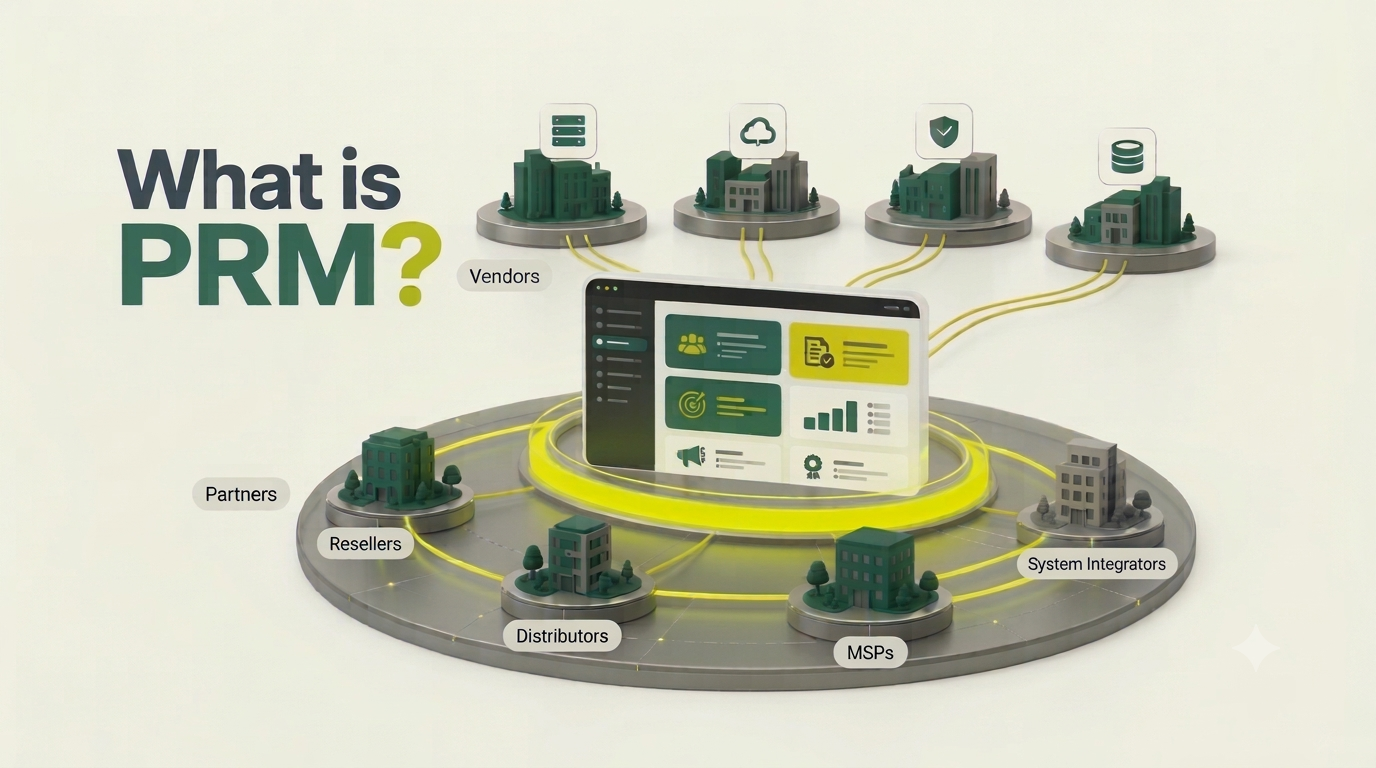
A PRM, short for Partner Relationship Management, is software that vendors use to manage their network of indirect sales partners: resellers, value-added resellers (VARs), managed service providers (MSPs), and distributors. Partner relationship management as a discipline covers the full set of processes a vendor needs to run a partner program, and PRM software supports that discipline.
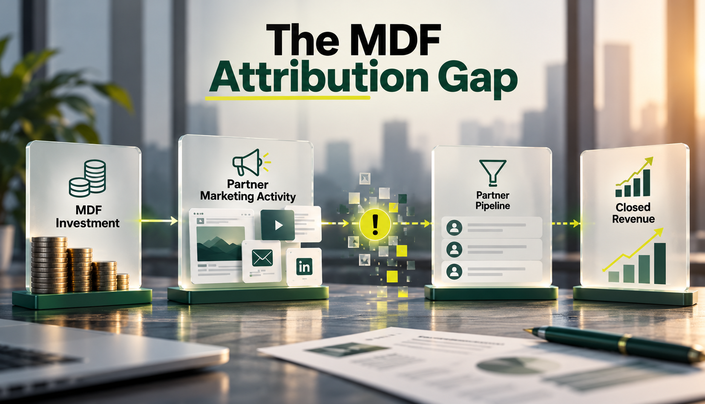
In practice, that means a PRM typically handles partner onboarding, deal registration and tracking, incentive administration (SPIFFs, rebates, MDF), and the distribution of sales and marketing resources partners need to sell effectively.
The “relationship” in the name is the key distinction from other sales software. A PRM manages the vendor’s relationship with the companies selling on its behalf, not the vendor’s relationship with the end customer who eventually buys the product. That partner-facing focus, usually delivered through a partner portal, deal registration workflows, and partner-specific reporting, is what separates a PRM from a standard CRM or sales tool.
For vendors running a channel program at any real scale, a PRM is typically where partner activity becomes visible, trackable, and manageable, rather than scattered across individual sales reps’ inboxes and spreadsheets.
What Does PRM Software Do?
Most PRM platforms are built around a consistent set of core functions, even though the specific feature set varies by vendor and industry:
- Partner onboarding: certifying new partners, provisioning their access, and getting them ready to sell
- Deal registration: letting partners submit and track opportunities so a vendor can see what’s actually in the pipeline
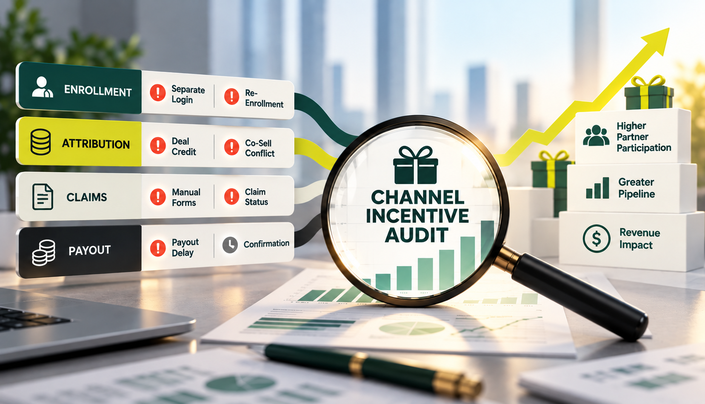
- Incentive administration: managing SPIFFs, rebates, MDF (market development funds), and referral payouts in a consistent, auditable way
- Partner portal access: a dedicated place for partners to find pricing, product information, and program details without going through a rep
- Co-marketing and sales enablement: shared campaigns, content, and materials partners need to represent the vendor accurately
- Certification and training tracking: a record of what each partner’s team is qualified to sell, often tied to incentive tiers
The common thread across all of these is visibility. Before a PRM, this information typically lives across individual sales reps’ inboxes, shared spreadsheets, and whatever each partner sends over. A PRM centralizes it, so a vendor’s sales, marketing, and operations teams can see what’s happening across the partner program without manually chasing updates.
PRM vs. CRM: Key Differences
A CRM (Customer Relationship Management) and a PRM solve related but distinct problems, and the overlap between the two is a common source of confusion worth addressing directly.
A CRM manages a company’s direct relationships: its sales pipeline, customer accounts, and support and service history. A PRM manages the layer above that, the partners (resellers, VARs, MSPs, distributors) who sell on the vendor’s behalf rather than buying directly.
In a traditional setup, a deal a partner registers in a PRM often needs to make its way into the vendor’s CRM to become a tracked, forecastable opportunity, and that handoff is one of the more common integration points vendors have to get right.
Some platforms blur the line in practice, and some CRMs offer PRM-like functionality as an add-on module. But the underlying distinction holds regardless of how a specific vendor packages it: a CRM is built around the customer relationship, a PRM is built around the partner relationship.
PRM vs. Partner Management
“Partner management” and “PRM” are often used interchangeably, but they describe different things. Partner management is the broader discipline, the strategy, processes, and day-to-day work of running a channel program, independent of whatever software (if any) supports it. A PRM is one category of software built to support that discipline.
A vendor can technically do partner management with a PRM, a CRM, a well-organized set of spreadsheets, or some combination of the three, especially in the early stages of a channel program. The PRM is a tool for doing the work; partner management is the work itself.
Why Companies Use a PRM (Partner Relationship Management)
As a partner program grows past a handful of relationships, the informal version of partner management (spreadsheets, email threads, ad hoc deal tracking) tends to stop working. A PRM addresses a few specific problems that come with that growth:
- Centralized partner data, replacing information scattered across individual reps’ inboxes, personal notes, and disconnected files
- Deal visibility, giving sales, marketing, and operations a shared view of partner-sourced pipeline instead of relying on manual updates
- Standardized incentive administration, so SPIFFs, rebates, and MDF claims follow a consistent, auditable process rather than one-off exceptions
- The ability to scale a partner program without scaling operations headcount at the same rate
For a vendor running a program with a handful of partners, a lot of this can still be handled manually. For a vendor running a program with dozens or hundreds of partners across multiple regions, a PRM typically stops being a convenience and becomes nearly required for the program to function.
Most teams judge whether a PRM is actually working by a handful of standard metrics: partner-sourced revenue as a share of total pipeline, partner activation rate (how many onboarded partners actually register a deal), and time from deal registration to close. Tracking these consistently, rather than estimating them from scattered reports, is itself one of the main reasons vendors adopt a PRM in the first place.
Where Traditional PRM Runs Into Limits
Most PRM platforms were designed around a specific assumption: one vendor, one portal, one set of partners logging in to transact with that one vendor. For a long time, that assumption matched how channel programs actually operated.
It’s gotten harder to hold onto. Partners increasingly sell for multiple vendors at once, often bundling complementary products together into a single customer deal. Distributors, resellers, and systems integrators are operating more like a connected network of relationships than a set of separate, vendor-specific ones.
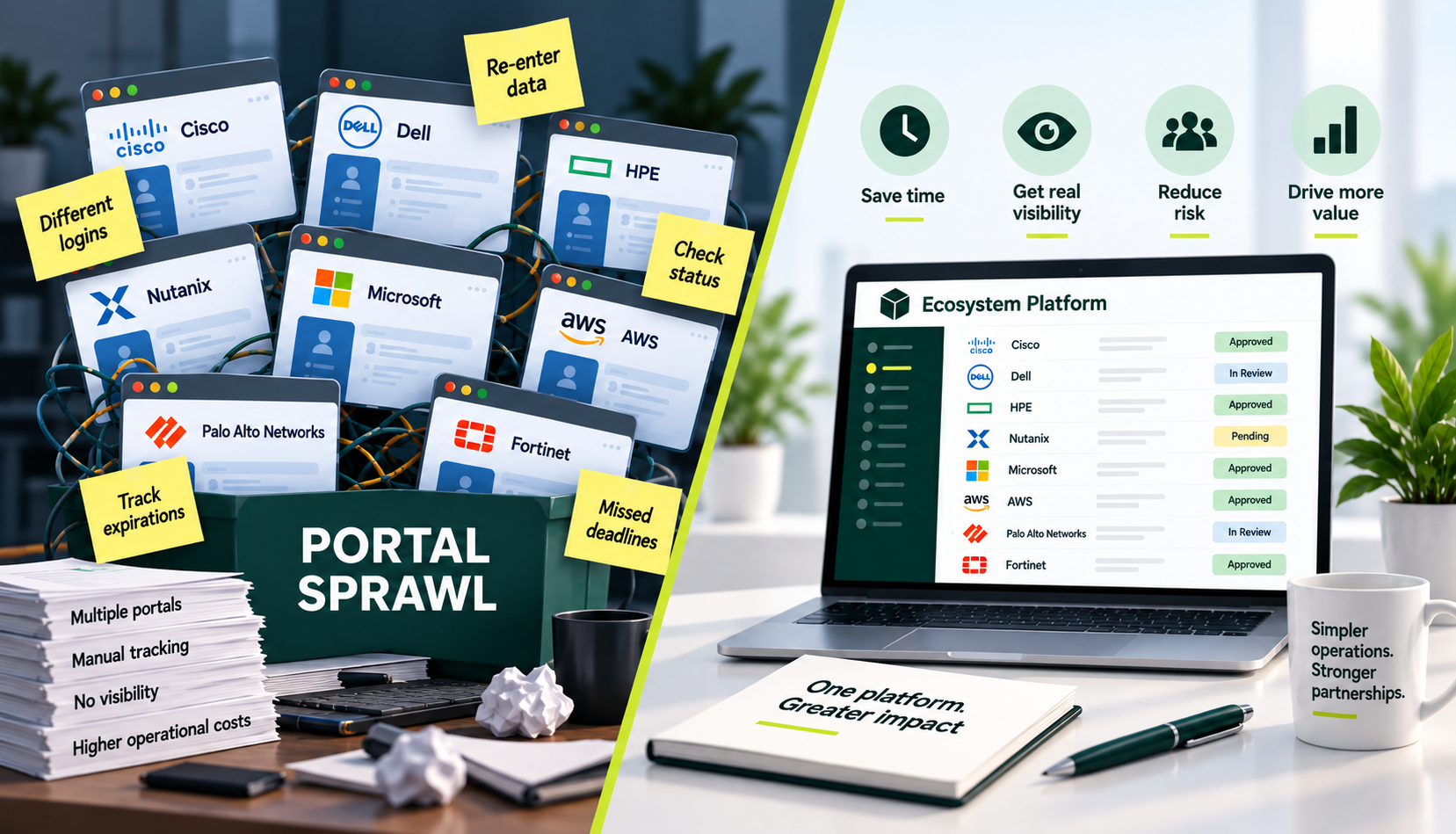
When the underlying structure of a channel program becomes multi-vendor and interconnected, a tool built around a single vendor’s world starts to show its limits in a few consistent ways: partners managing separate logins and workflows for each vendor they represent, vendors with limited visibility into how a given deal connects to other partners or products in the same transaction, and IT teams absorbing the integration work required to connect it all together.
None of this means traditional PRM platforms are poorly built. It means the model many of them were built for, and the model the channel increasingly runs on, have started to diverge.
How the Partner Relationship Management Category Is Evolving
A newer category of partner platform has emerged to address that gap, often described as ecosystem-driven: built around the idea that a vendor’s partner program doesn’t operate in isolation, it operates inside a shared network of partners, distributors, and other vendors transacting together.
That shift tends to show up as three recurring friction points in the traditional, single-vendor PRM model:
- Portal fatigue: partners managing a separate login and workflow for each vendor they represent, rather than one consistent place to work
- Data blindness: deal and partner data siloed by vendor, making it difficult for anyone involved to see the full picture of a multi-vendor transaction
- Integration drag: the IT and engineering work required to connect a vendor-specific PRM into everything else a partner or vendor already relies on
Vartopia takes this ecosystem-driven approach, but not by building another vendor-specific portal for partners to adopt. It’s built around the multi-vendor reality partners already operate in, connecting across the PRMs and portals partners already use instead of asking each partner to onboard to one more standalone system per vendor relationship.
This doesn’t make traditional PRM the wrong choice for every vendor. A company running a smaller, single-channel partner program may not feel much of the friction described above yet. But for vendors operating in increasingly interconnected, multi-vendor channels, co-selling across distributors, resellers, and alliance partners, it’s enough of a structural shift to be worth treating as its own category, not simply a feature update layered onto traditional PRM.
The Bottom Line for Vendors
PRM isn’t going away, and for a vendor running a single-channel program, the traditional model still does exactly what it’s built to do: centralize partner data, standardize incentives, and give sales and marketing a shared view of the pipeline. What’s changing is the shape of the partner programs these tools now have to support.
As vendors increasingly operate across multiple partners, products, and co-sell arrangements at once, what matters isn’t just what a PRM does, it’s whether it was built for the single-vendor world PRM originated in or the multi-vendor ecosystem most channel programs run on today.
That’s not a minor implementation detail, it’s the difference between a tool that keeps pace with how partners sell now and one that quietly falls behind it.

Book a demo and see what an ecosystem-driven approach looks like in practice, not just in theory.