
This isn’t really about data entry. A partner sources and qualifies a deal on their own clock, inside their own business, and none of that touches your systems. By the time you see anything, the deal has already been through steps you never watched happen.
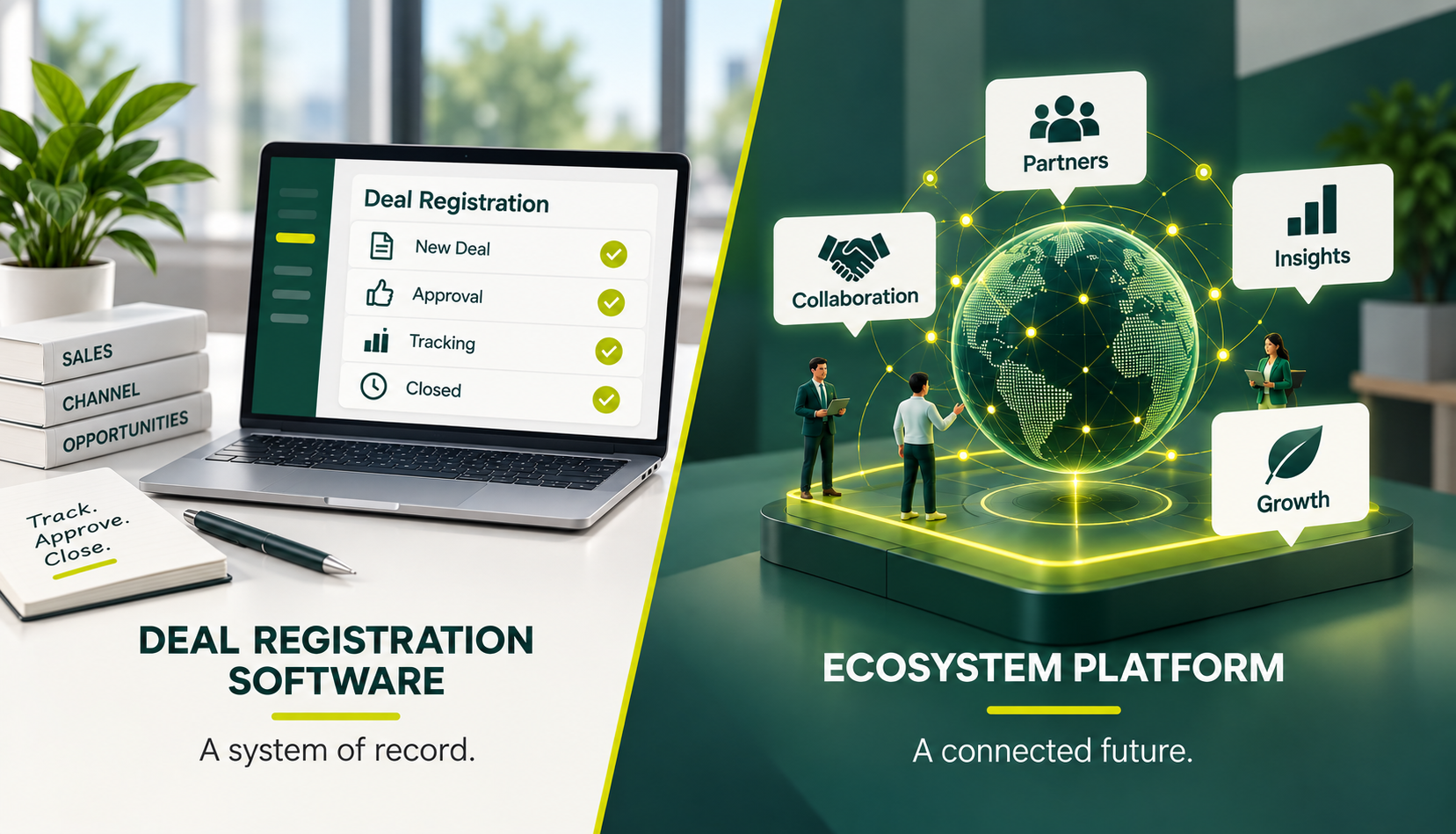
Deal registration is usually where this starts. But registering a deal and being able to actually see it afterward turn out to be two separate things, and most teams only solve for the first one. Here’s why registration alone doesn’t get you visibility, and what does.
What Causes the Channel Pipeline Gap
The short answer: your CRM only sees a deal once a partner registers it. And registration is the single most friction-heavy step in the entire channel sales funnel.
Everything before that point, sourcing and qualifying, happens entirely inside the partner’s own business. Everything after it depends on both sides updating the same record, which rarely happens cleanly.
The result: a pipeline report that reflects what partners remembered to log, not what they’re actually working.
The 5 Stages of the Channel Sales Funnel
- Sourcing. A partner finds the opportunity inside their own book of business. This is invisible to you by design.
- Qualification. The partner sizes up budget, timeline, and fit. Still invisible. Deals that don’t survive this stage were never going to reach you anyway.
- Deal registration. The partner formally claims the deal with you. This is the first moment it can exist in your pipeline, and the moment most vendors start counting.
- Active evaluation. Partner and vendor work the deal together: demos, proposals, proof of value.
- Close. Won, lost, or stalled somewhere in between.
Stages 1 and 2 are supposed to be invisible. That’s normal. The problem is that stage 3 is often just as invisible, for reasons that have nothing to do with the deal itself.
Why Partner-Sourced Deals Don’t Show Up In Your CRM
A registered deal going dark usually isn’t one clean cause. It’s a handful of small frictions that stack up until neither side fully trusts the record anymore. A few of these repeat across almost every channel program.
- Registration takes too long. If the form is clunky or the process spans multiple systems, partners deprioritize it, especially when a competing vendor’s process is faster.
- Status updates aren’t shared. Once a deal is registered, most portals only show status to the vendor. Partners have no reason to keep a record current if they can’t see anything back.
- Partners are juggling multiple vendors. A partner working with ten vendors will naturally put the most effort into the portal that’s easiest to use, not the one on which your revenue depends.
- There’s no single record both sides trust. When the partner’s version of a deal’s status and your CRM’s version disagree, someone has to reconcile it manually, and usually no one does.
None of these are partner problems. They’re process problems that happen to surface as a partner behavior.
What’s at Stake With Poor Pipeline Visibility
A pipeline that’s out of sync with partner activity doesn’t just look messy on a dashboard. It costs you in three specific ways, and not all of them are obvious until you’re already dealing with the fallout.
- Forecasting gets less reliable. Deals partners are actively working aren’t in the system yet.
- Partners quietly redirect effort. They put more energy into vendors whose process gives them less friction and faster feedback.
- Your channel program looks weaker than it is. Reporting doesn’t reflect the activity that’s actually happening, which makes it harder to secure budget or leadership support for the program itself.
Closing the Gap Between Partner Activity and Pipeline
Two things have to be true at the same time. Registration has to be fast enough that partners actually bother with it. And status has to be visible to both sides, not just to you.
Most portals get the first part half right. Almost none get the second part right at all. That’s exactly where the gap reopens, even after a deal gets registered.
In practice, that means:
- One place for a partner to log a deal, in minutes, not days
- One live status both sides can see, not a spreadsheet or a follow-up email
That’s the model Vartopia Hub is built around. A partner registers a deal once, in one place, instead of using a different portal for every vendor. That registration is something you can see and use, not a form that disappears into someone’s inbox. How much syncs into your CRM depends on your systems, but your status always stays separate from what partners see.
That’s the real shift: from a form that goes quiet after submission, to a registration you can keep acting on. A few things make that hold up over time:
- Deals sync straight into your CRM. No one’s manually copying status between two systems, so the record stays accurate without extra work on either side.
- Account mapping flags overlap early. When a partner and your own reps are circling the same account, you see it before it turns into a registration dispute, not after.
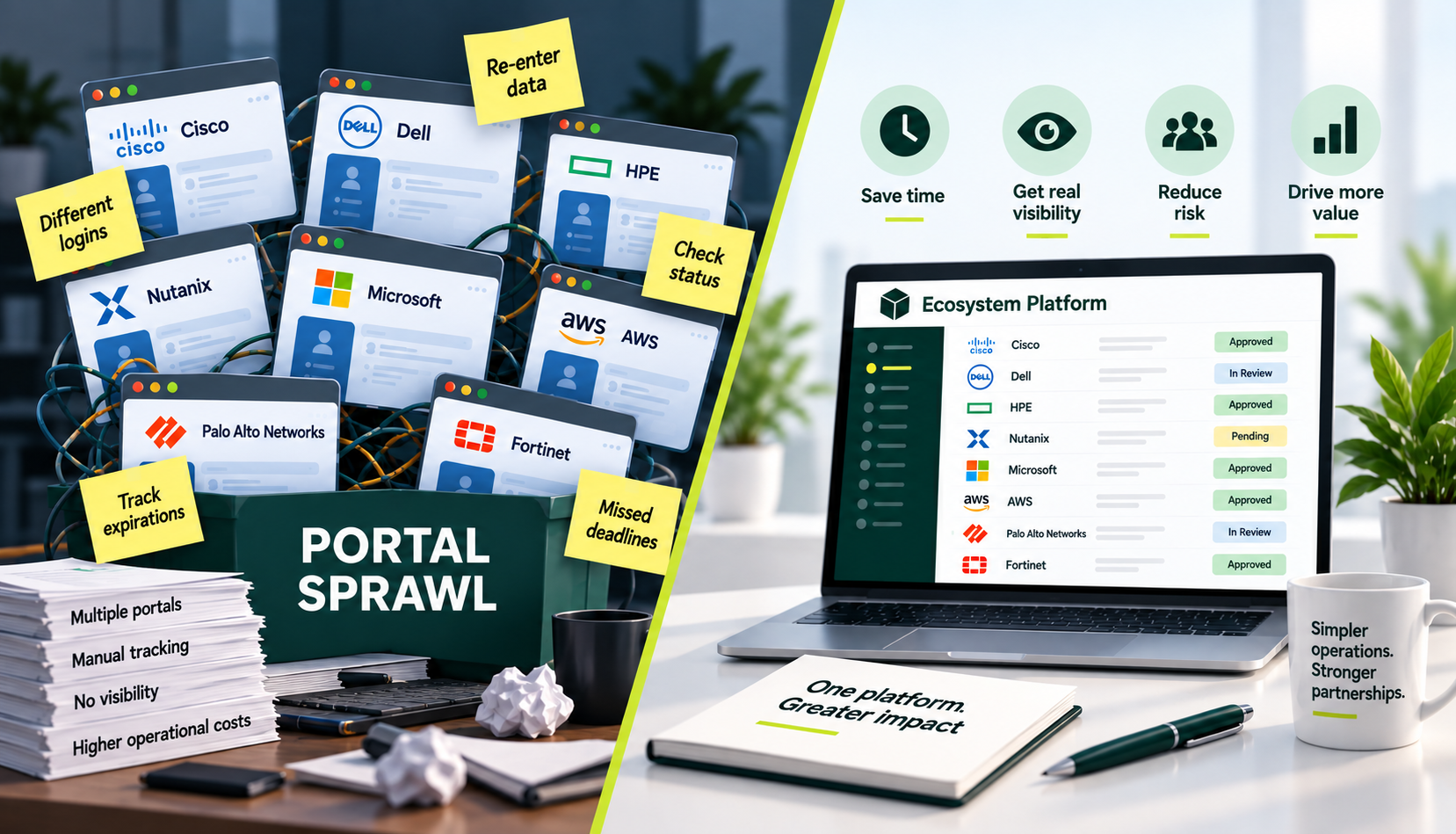
- Partners see every vendor in one place. A partner juggling ten vendor programs is far more likely to keep your deals current when your portal isn’t the one they have to log into separately from everything else.
- EZ Update lets partners update a deal via a tokenized email link, no login required. That’s the specific answer to why partners don’t keep status current: no login, no portal navigation, no friction.
None of this replaces the fix. It’s what keeps the fix from wearing off after the first few weeks.
Signs Your Pipeline Finally Matches Partner Activity
Go back to where this post started: two versions of the same pipeline, and most vendors only ever see one of them.
Here’s how you know that’s no longer true, without guessing. Deals start showing up within days of a partner working them, not weeks later during a cleanup. Partners start updating status on their own, because they can finally see something back.
Forecasts hold up better, since the pipeline reflects real activity instead of a batch of catch-up entries at quarter end. Ownership disputes get rare, because overlap surfaces early instead of after the fact.
When those things are true, you stop managing around the mismatch. Your pipeline and what your partners are actually doing become the same story, told from both sides at once.

Request a demo and see how much of your partner-sourced pipeline your CRM is actually missing.